Showing posts with label Hulu. Show all posts

Friday, 17 August 2012

Content Restrictions

On Australian television there are restrictions which govern the amount of time which must be allocated to local content. Between 6am and midnight 55% of content on television must be Australian. This is put into place to ensure that the industry is able to survive and continue.


Canada is in a similar situation to Australia in regard to broadcast television. Like us, they produce a high amount of children’s content (open to page i). They, like Australia also have a smaller industry and population than the United States. Without protection they would likely be overrun by the larger, and not culturally distant American television industry.


So far, Canada are not placing restrictions on streaming services because they have so far found it not to be detrimental to their local industry. An investigation by Canadia Radio Television and Telocommunications Commission (CRTC) found that people who live in homes with Netflix do not watch less local content than those without. However it is still early days for the online streaming service who only got a hold of the Canadian market in 2008. The CRTC have pledged to closely monitor the impact of these services on the Canadian broadcast environment over time, and adjust the laws if they feel that online streaming services are harmful to the industry.
So how will the local industry be affected if streaming services become increasingly popular in Australia? Will it be helped or hindered? Should new guidelines be devised to include streaming services?

More importantly, how would you go about placing restrictions on a service without time limitations like television? It seems there are a lot of dilemmas to explore here and we are only beginning to scrape the surface of what might eventually be a whole new way of looking at local broadcast industries.

Sunday, 12 August 2012

From Picture Theatres to Online Streaming

Throughout history the way video content has been consumed has been dependant on the broadcast technologies available at the time. At the turn of the twentieth century people flocked to picture theatres and nickelodeons to see the latest film or instalment of a film series1 2. The popularity of these movie theatres inevitably led to developments in production techniques, including multi-shot films3. These films could range from being ten minutes to over an hour and a half in length4.


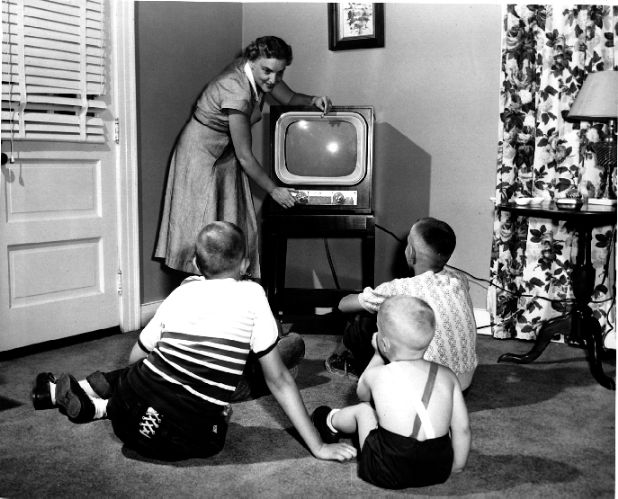
As technology progressed further the television was invented. This saw the movie series format transform into television series5. Broadcast technology was brought into the homes of everyday people for the first time. Buying your own television set meant that you could enjoy moving pictures from the ease and convenience of your own home. Meanwhile, the cinema began taking on a different role and showed only the latest feature length films5.

We now find ourselves at another technological crossroad. Video streaming has taken off in countries such as the United States, Canada and South America. So how will the current broadcast industry adapt if technology like this comes to Australia? We have seen throughout history that the kind of technology available has changed the industry in dramatic ways. For example, before the launch of Youtube in 2005 what avenues were available to allow people to broadcast themselves? In fact, short films in general had very limited outlets for being broadcast before youtube.


So what can we expect if content traditionally seen on television starts moving online in Australia? And in some ways, is this already happening?

References:
1.Abel, Richard (2005). Encyclopedia of Early Cinema. New York: Routlege. p 316.
2. Jaycox, Faith (2005). The Progressive Era. New York: Facts on File Books. p 270.
3.Gazetas, Aristides (2008). Am Introduction to World Cinema. North Carolina: McFarlane and Company Publishers. p 31.
4.Grieveson, Lee (2004). The Silent Cinema Reader. New York: Routledge. pp. 80–81.
5.Dixon, Wheeler and Foster, Gwendolyn (2008) A Short History of Film. New Jersey: Rutgers University Press. p 221.


Kick start

A good starting point with some general info on the state of online video demand platforms in Australia. Looks like we are a bit behind the eight ball, only a matter of time before large companies like netflix and hulu overtake the expensive and inadequate services of Australia's quicklflix. The questions is why haven't they come here yet? How long will it be before they do?