Friday, 17 August 2012

Content Restrictions

On Australian television there are restrictions which govern the amount of time which must be allocated to local content. Between 6am and midnight 55% of content on television must be Australian. This is put into place to ensure that the industry is able to survive and continue.


Canada is in a similar situation to Australia in regard to broadcast television. Like us, they produce a high amount of children’s content (open to page i). They, like Australia also have a smaller industry and population than the United States. Without protection they would likely be overrun by the larger, and not culturally distant American television industry.


So far, Canada are not placing restrictions on streaming services because they have so far found it not to be detrimental to their local industry. An investigation by Canadia Radio Television and Telocommunications Commission (CRTC) found that people who live in homes with Netflix do not watch less local content than those without. However it is still early days for the online streaming service who only got a hold of the Canadian market in 2008. The CRTC have pledged to closely monitor the impact of these services on the Canadian broadcast environment over time, and adjust the laws if they feel that online streaming services are harmful to the industry.
So how will the local industry be affected if streaming services become increasingly popular in Australia? Will it be helped or hindered? Should new guidelines be devised to include streaming services?

More importantly, how would you go about placing restrictions on a service without time limitations like television? It seems there are a lot of dilemmas to explore here and we are only beginning to scrape the surface of what might eventually be a whole new way of looking at local broadcast industries.

Thursday, 16 August 2012

Pulling Together a Feature


At this stage of our project we’ve found several important angles to explore regarding the way online streaming will affect the broadcast industry if legal streaming alternatives became available and popular in Australia. We have divided up the story angles between our group members.

I will be examining the effect of services such as Netflix on children’s content, utilising case studies from the United States. I will also be examining the way local content has been affected using Canada as a case study. Live content seems to be a way to keep television on top at the moment and hence is another important angle to explore.

Sarah B will be looking at the legal implications of online streaming in regard to intellectual copyright and copyright. She will be interviewing people at the forefront of their fields to help explain the complexity of these ideas.

In some ways online streaming has been shown to help ratings on television. Eryk will be examining the catch-up effect. He will also be looking at ways that people are already streaming content in Australia, whether legal or illegal.

Tyson will be looking at the way the presentation of websites allow the effective dissemination of information to audiences. He will also be considering the appropriate publication and style for our website.

Jessica will be examining the impact on advertising. Television and online content work according to very different business models and advertising on each medium have very different levels of effectiveness.

We will be researching these in more detail and outlining our findings in the blog.

Wednesday, 15 August 2012

Style In The House


I have talked previously how we are going to use multimedia to condense our content and make sure we can output a maximum of information with a minimum of length. But this writing made little mention of our intended in-house writing style and the way this should approach the increasingly short attention spans. 

Jakob Nielsen's article How Little Do Users Read? expands on the statistics priorly referred to concerning… well….how little web users these days are actually reading of online text. According to his very-distilled figures, readers will only read 20% of text or thereabouts on pages containing the median number of 500 words.Furthermore, users are spending an average of twenty seconds at most on pages containing 200 words and very minimal 80 seconds on those containing 1000 to 1200 words. The latter bracket, (1000 - 1200) will most certainly account for the word count inhabiting each of our pages as a resource rather than short-form news site.

source:www.lifehacker.com.au
 If this situation was without remedy it would surely spell death for our web feature before we had even begun...

Alas, what we have deemed the best solution to our text problem is found in another Nielsen article, 'Content Strategy'. As he puts it best, "the very best content strategy is one that mirrors the user' mixed diet. There's no reason to limit yourself to one content type. It's possible to have short overviews for the majority of users and supplement them with in-depth coverage and white papers". 

There is a wide range of ways that web writers utilize this strategy. For us, we can achieve this concept through implementing point summaries of articles and larger form writing as on opt-in function. Additionally, larger form pieces will be broken up by sub-headings as well as click-downs to make sure those adept at skimming can do so at liberty. In other words, by (in essence) staggering our text we can retain the integrity of our information whilst appealing to both the eternally rushed and more-pensive demographics. The 'Mixed-Diet' approach is one that we figure will be integral in deciding whether our website succeeds or fails (as it is in almost every other media site)... Here's hoping. 

And with that little tidbit, we continue our research (onwards and upwards) into web-writing so as to make sure we can strike that difficult but magical balance that others have before us, those odd bedfellows, academia and accessibility!

(I will end now as I am I most probably breaking the rules I have just laid out)

www. Is Online Advertising Really That Effective. com?

With the movement of consumers to online streaming services, it is valid to consider whether advertisers would also move online- chasing consumers for the greatest economic revenue. If this decision proved to be fruitful, what impact would this have on the Broadcasting Industry; who rely on advertising revenue to purchase content?

Less Revenue = Less Content... the death of the Broadcast Industry? 

What effect will it really have?
1. How Netflix currently advertise.

Netflix currently has no advertising, it relies on subscribers to pay bills. There are discussions for advertising to be introduced, but it has not been stated in what form these advertisements would take (eg: instream ads or banner). 


2. How can we project advertising revenue will be affected?
If Netflix accepts advertising, we can project that this will not significantly impact the television industry, as individuals have trained their eyes to search for content and ignore advertising. Due to this "banner 
blindness", their is a need for a new intergrated advertising approach.  

banner blindness
What Advertising?
 3. Ways Netflix may get around "banner blindness" of ignoring ads and intergrate advertising on the web better? 

With the viewers attention in the stream, Netflix may adopt a form of advertising which places advertisements in front of the stream- like the in-image advertising or intrusive stream advertisements on top of videos, which count down until they can be skipped or closed.

As this kills the user experience- annoying them by forcing them to experience things they are not interested in- it could turn users away from using Netflix and convince them to 'put up with' the more conventional advertising seen on Television.

Another possibility for Netflix would be to allow users to select their own options of interests, as a method of directing what ads they would be exposed to. This would reduce the frustration from users by exposing them to things they might be interested in. An example of this would be predictad.com where the search suggestions (the content that  users read and key word targeting) results in ads being highly relevant and engaging to the user (a new way of profiling users).

4.Would these approaches then impact TV advertising?
 
Due to 'Banner Blindness' and other integrated advertising approaches annoying the viewer, it seems there will not a dramatic shift of advertising moving from TV to the internet.  The television industry will therefore not collapse from lack of funding, as the benifits of advertising on online in comparison to television are not significant enough to warrant a dramatic shift. 


Conclusion.

Internet not so golden after all

While Netflix poses a challenge for the industry in regards to content. It does not pose a direct challenge of forcing advertisers to choose who to advertise with:

1. It does not yet accept any form of advertising.

2. Advertising on the internet is not yet as effective as advertising on television


Its Already Here

In some form...accessing netflix is already possible in Australia, if slighltly illegal, the number of youtube tutorials and online guides is a testament to its increasing popularity as an alternative to torrenting.


Tuesday, 14 August 2012

Down the Legal Rabbit Hole


Lone Star College Online (2012) 'Law Book' <http://www.txprofdev.org/apps/onlineteaching/legal/>


I have a confession to make – I am addicted to Pretty Little Liars. It’s shameful, I know! Every Wednesday afternoon you will find me glued to my laptop screen waiting for another clue regarding the mysterious A’s identity.

There is a delay of fifteen episodes in Australia. Being the impatient Gen-Y-er that I am, I instinctively turn to the Internet to satisfy my PLL cravings.

Streaming television shows online is becoming so commonplace that very few people question the legality of their actions. In America, 23.9 million people use the service Netflix to access huge amounts on online content.

However, streaming shows yet to be released in Australia does constitute an offence: intellectual property theft.

Over the next few weeks I will investigate how international licensing agreements work to answer two big questions:

  1. As a matter of law, why can’t I access Netflix, Hulu and other streaming services in Australia?

    and
      
  2. If these services were to move to Australia, how could they legally enforce their rights to stream movies and television shows exclusively?

Sunday, 12 August 2012

From Picture Theatres to Online Streaming

Throughout history the way video content has been consumed has been dependant on the broadcast technologies available at the time. At the turn of the twentieth century people flocked to picture theatres and nickelodeons to see the latest film or instalment of a film series1 2. The popularity of these movie theatres inevitably led to developments in production techniques, including multi-shot films3. These films could range from being ten minutes to over an hour and a half in length4.


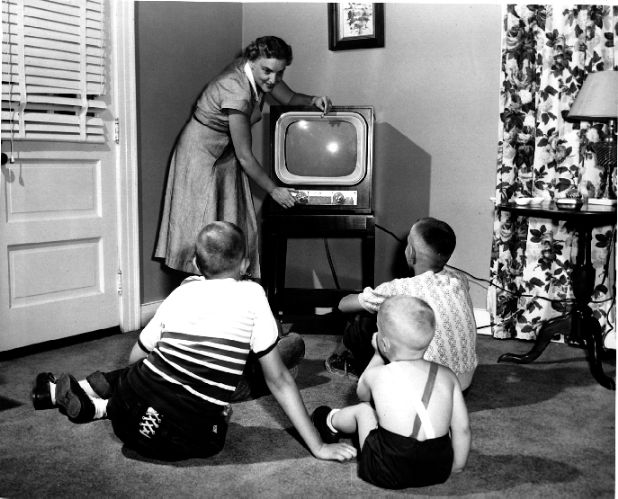
As technology progressed further the television was invented. This saw the movie series format transform into television series5. Broadcast technology was brought into the homes of everyday people for the first time. Buying your own television set meant that you could enjoy moving pictures from the ease and convenience of your own home. Meanwhile, the cinema began taking on a different role and showed only the latest feature length films5.

We now find ourselves at another technological crossroad. Video streaming has taken off in countries such as the United States, Canada and South America. So how will the current broadcast industry adapt if technology like this comes to Australia? We have seen throughout history that the kind of technology available has changed the industry in dramatic ways. For example, before the launch of Youtube in 2005 what avenues were available to allow people to broadcast themselves? In fact, short films in general had very limited outlets for being broadcast before youtube.


So what can we expect if content traditionally seen on television starts moving online in Australia? And in some ways, is this already happening?

References:
1.Abel, Richard (2005). Encyclopedia of Early Cinema. New York: Routlege. p 316.
2. Jaycox, Faith (2005). The Progressive Era. New York: Facts on File Books. p 270.
3.Gazetas, Aristides (2008). Am Introduction to World Cinema. North Carolina: McFarlane and Company Publishers. p 31.
4.Grieveson, Lee (2004). The Silent Cinema Reader. New York: Routledge. pp. 80–81.
5.Dixon, Wheeler and Foster, Gwendolyn (2008) A Short History of Film. New Jersey: Rutgers University Press. p 221.